


Churches invest significantly in screen technology for worship centers and children's areas, yet many valuable display opportunities remain underutilized throughout their facilities. Screens in check-in areas, volunteer break rooms, and hallways often display nothing but logos or blue screens, representing missed opportunities to communicate and inspire.
This article explores how strategically utilizing all available screens creates a cohesive communication experience while maximizing your technology investment. You will discover how every display can become a purposeful touchpoint that guides, informs, and connects your congregation.
Key takeaways
- Most church screens remain underutilized, displaying static logos instead of dynamic content that informs and equips throughout the campus experience.
- Strategic content in check-in areas and hallways can communicate announcements, showcase curriculum themes, and reduce perceived wait times.
- Effective digital signage matches content to context, using the 3-second rule in transitional spaces where people move quickly.
- Cloud-based platforms enable centralized management across all screens, allowing instant updates without complex on-site maintenance.
- Churches implementing comprehensive screen strategies report reduced printing costs, increased participation, and improved visitor experience.
Why every church screen is a ministry opportunity
Each screen in your church represents a chance to inform, inspire, or equip your congregation without requiring additional staff time or verbal announcements that can be easily forgotten. In a typical Sunday morning, dozens of announcements compete for attention. Digital signage for churches creates persistent touchpoints that reach people when they are naturally receptive.
Think about it. Digital signage transforms passive waiting areas into engaging touchpoints, helping visitors and regular attendees feel more connected to your church's mission and activities. Rather than staring at blank walls or scrolling through their phones, people encounter purposeful content that reinforces your message and values.
Strategic screen placement creates a seamless experience from parking lot to pew, reducing confusion for newcomers and helping them navigate your facility with confidence. First-time visitors often feel disoriented in unfamiliar spaces, and well-placed digital wayfinding can eliminate that anxiety before it develops.
Unlike printed materials that quickly become outdated, digital displays allow instant updates across your entire campus, keeping all messaging current and relevant. When an event time changes or a speaker cancels, you are not scrambling to replace posters or reprint bulletins, but are updating content once and deploying it everywhere.
The digital first impression of the check-in area
The check-in zone often features screens that simply display logos or basic instructions when they could be showcasing upcoming events while parents wait. This represents one of the most predictable congregation touchpoints in your entire facility, yet many churches treat these screens as afterthoughts.
People congregate in check-in areas, creating a prime opportunity for communicating announcements they might miss elsewhere. Parents juggling multiple children are not always focused during service announcements, but they are a captive audience during check-in.
Screen content in check-in areas can reduce perceived wait times with engaging information about children's curriculum themes, safety procedures, or upcoming events. When people's attention is occupied with interesting content, waiting feels shorter.
Check-in screens can display QR codes linking to your church app, online giving portal, or volunteer sign-up forms, turning waiting time into action. Instead of passive information consumption, you are creating opportunities for immediate engagement that extends beyond the physical campus.
Transforming downtime into connection time in parent waiting zones
Parent lounges and hallway waiting areas typically feature underutilized screens that could preview what children are learning, creating conversation starters for the ride home. Parents want to reinforce Sunday lessons throughout the week, but they often leave with no idea what their children experienced
Testimonial videos from other parents about implementing faith practices at home make meaningful content while adults wait for their children. Peer stories resonate more powerfully than institutional announcements, creating authentic connections between families who might never otherwise interact.
Strategically placed screens can highlight volunteer opportunities specifically in children's ministry, where watching parents might be most inclined to serve. These families already understand the value of kids' programming, making them natural candidates for team recruitment. When harnessed correctly, church signage can be used to boost parent engagement.
Equipping your team with visual tools
Volunteer break rooms and preparation areas often contain unused or underutilized screens that could display training refreshers, celebration stories, or encouragement. Your volunteers give their time sacrificially, so why not use every available tool to support, equip, and appreciate them?
Screens in volunteer spaces become valuable training tools when displaying short procedural videos, safety reminders, or other information that new team members can reference. Rather than remembering everything from a single orientation session, volunteers can refresh their knowledge on demand.
Digital signage in preparation areas can show upcoming curriculum themes, giving volunteers preview information to better prepare for their roles. When team members understand what is coming, they can mentally prepare discussion approaches, gather supplementary materials, or boost the experience in other ways.
Guiding the guest journey through lobbies and transition spaces
Church lobbies typically contain screens showing announcements, but rarely leverage these displays for wayfinding assistance or real-time information updates. First-time guests often feel overwhelmed navigating unfamiliar spaces, and clear directional information can eliminate that anxiety immediately.
Transitional hallways with digital signage can display engaging quotes, scripture, or thought-provoking content that enriches the movement between spaces. Every moment on your campus represents an opportunity to inspire or challenge thinking, even the walk from parking to sanctuary.
Many churches fail to use lobby screens to highlight their mission-focused activities, missing opportunities to showcase how donations are making real impact. Generic announcements about budget needs feel abstract, but specific stories about how contributions funded a community program create tangible connections between giving and outcomes.
Screens in transition spaces can display countdown timers to service start times, helping attendees know exactly when to find their seats. This simple feature reduces anxiety for punctuality-conscious visitors while subtly encouraging people to move toward the sanctuary.
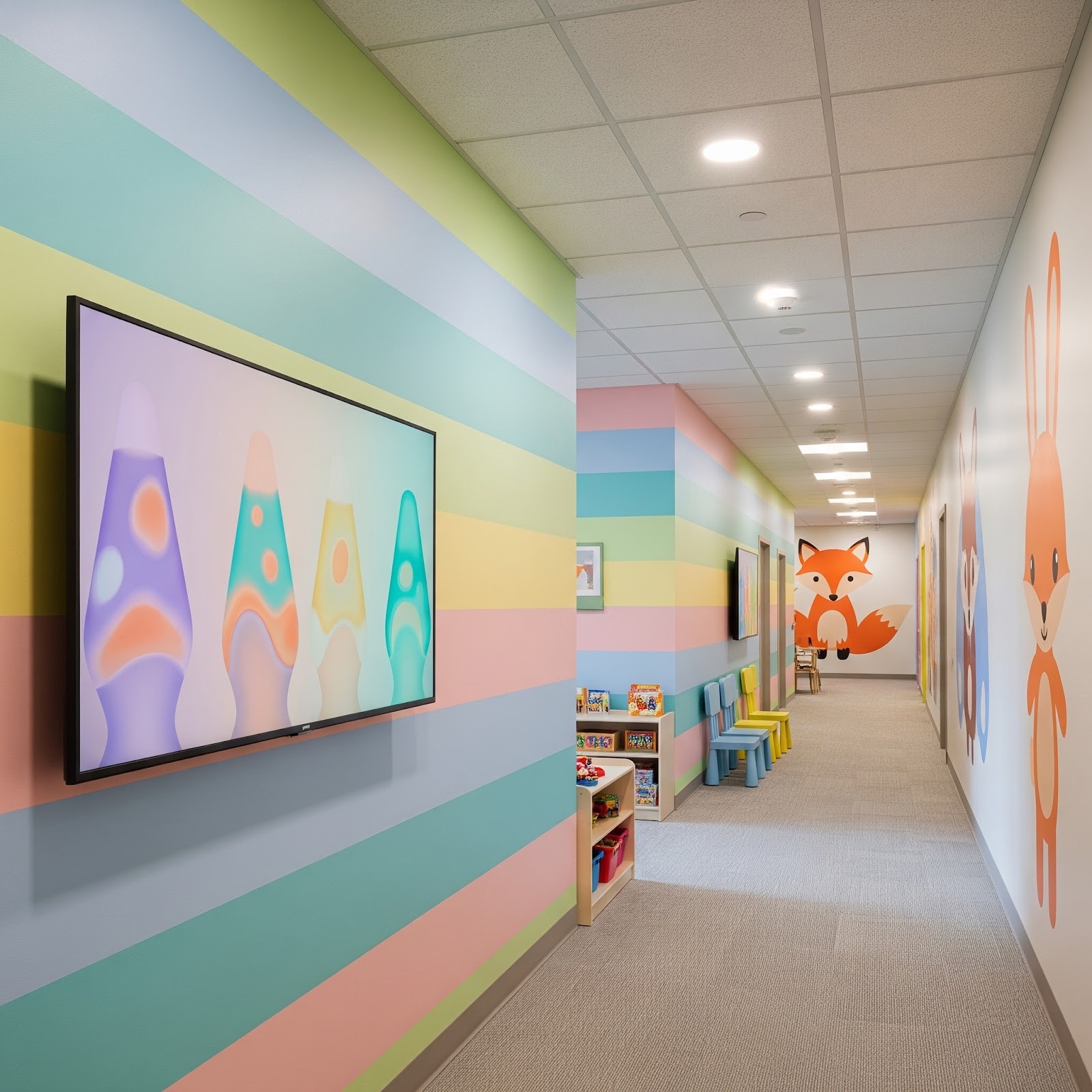
Effective content display strategies
Effective screen content matches the specific context and dwell time of each location, like quick, scannable information for transitional spaces versus more detailed content for waiting areas. A hallway screen needs bold headlines and minimal text, while a parent lounge can accommodate more comprehensive information.
The most successful church digital signage rotates content types, balancing informational slides with inspirational content, and interactive elements like QR codes. Variety maintains attention and serves different audience needs simultaneously. Some people want practical information while others respond to emotional or spiritual content.
Content scheduling should align with your church calendar, promoting upcoming events 2-3 weeks ahead while removing outdated information promptly after events conclude. Nothing undermines credibility faster than promoting an event that happened two weeks ago.
Rather than overwhelming viewers with text, high-impact screens utilize the 3-second rule so congregants can grasp core messages almost instantaneously. If someone cannot understand your main point in three seconds, they probably will not stick around to figure it out.
Technical considerations for maximizing church screens
Many churches already have the necessary hardware but lack a unified content management system that allows consistent updating across all campus screens. Fragmented approaches, where different screens require different update processes, create bottlenecks that ultimately result in outdated or neglected displays.
Cloud-based platforms like Playlister enable staff to update content from anywhere, eliminating the need for physical media transfers, on-site computer management, or manual intervention. When your children's pastor can schedule next month's curriculum preview from their home office on Tuesday evening, you have removed friction from the content creation process.
Effective digital signage solutions include scheduling capabilities that automatically adjust content based on service times, day of the week, or specific ministry activities. Your Saturday evening service audience may need different information than your Sunday morning crowd, and automated scheduling helps appropriate content appear without manual intervention.
The ROI of strategic screen utilization
Churches report significant reductions in printing costs after implementing comprehensive digital signage strategies across all available screens. When announcements, event promotions, and informational materials shift to digital formats, paper and ink expenses drop dramatically, often enough to offset technology investments within the first year.
Facilities utilizing screens effectively see measurable increases in event participation, as announcements reach people multiple times throughout their campus visit. Repetition drives retention, and someone who encounters an event announcement three times across different screens is far more likely to remember and attend than someone who hears a single verbal mention.
Beyond financial benefits, churches report qualitative improvements in visitor experience, with guests citing better wayfinding and greater awareness of church activities. Exit surveys consistently reveal that clear communication makes newcomers feel welcomed and informed rather than confused and overlooked.
Starting small for big impact
Begin with a screens-based church tech audit to identify all existing displays and evaluate their current usage, visibility, and potential for elevated communication value. Walk through your facility with fresh eyes, noting every monitor or television that could serve a communication purpose beyond its current function.
Create a sustainable content creation workflow by identifying which staff members or volunteers will be responsible for different types of screen content. Without clear ownership, even well-intentioned digital signage strategies collapse as competing priorities overwhelm good intentions.
Consolidate all screen management into a single, user-friendly platform that allows authorized team members to push updates from anywhere. Try Playlister for free to discover how centralized content management transforms your entire communication approach.
Measuring success beyond assumptions
Track engagement metrics by including unique QR codes on digital signage that allow you to identify which screens drive the most interaction with your content. When your lobby screen generates 50 scans while your hallway screen produces only 5, you have gained actionable intelligence about placement effectiveness and content resonance.
Conduct periodic surveys asking congregants where they learn about church events to determine if your screen strategy is effectively communicating important information. Assumptions about communication effectiveness rarely survive contact with actual data. Your congregation will tell you what is working if you ask.
The most successful churches establish baseline metrics before implementation, then track improvements in areas such as volunteer signups, event attendance, and reduced questions at information desks. Without baseline data, you are left with subjective impressions rather than concrete evidence of impact.

Future-proofing your church screen strategy
Planning for interactive capabilities in your digital signage strategy allows for future expansion into touchscreen directories, check-in kiosks, or feedback collection points. Today's one-way information displays could become tomorrow's two-way engagement platforms as technology evolves and prices decrease.
Consider how emerging technologies like audience analytics could improve your screen strategy by measuring viewership patterns and optimizing content accordingly. Understanding which content captures attention and which gets ignored allows continuous refinement of your communication approach.
Churches at the forefront of communication are integrating their digital signage with social media feeds, allowing real-time community engagement to appear on campus screens. When congregation members see their own social posts displayed during their campus visit, they experience a tangible connection between the digital community and physical gathering.
Transform your church experience through an intentional screen strategy
When approaching every screen as a ministry tool rather than just a display device, you create multiple touchpoints that reinforce your message and mission throughout the entire church experience. Your congregation encounters dozens of messages daily competing for their attention, but consistent, strategic communication across all available channels helps your most important messages break through.
The screens already installed throughout your facility represent significant investments in communication infrastructure. Maximizing their potential does not require additional hardware purchases or major technical overhauls, just intentional strategy, consistent content creation, and unified management systems that make updates simple rather than burdensome.